The life of Polly

Hi - and welcome to my world - here you'll find all my posts which are about me and what makes me tick. If you follow the links in the side bar you'll discover Polly Laminate - my collage work; Polly Chrome - my photos and other images; Polly Fibrous - everything textile and finally Polly Valent - where you'll find the sketch design challenges and other things I'm passionate about sharing - so put the kettle on and have a look around.

Salut! et bienvenue dans ma monde - ici vous trouverez tous qui parle de moi et ma façon de voir le monde. Si vous suivez les liens sur le côté vous découvrez Polly Laminate - mes collages; Polly Chrome - les photos; Polly Fibrous - tous qui est textile et Polly Valent - ou se trouve les défis de Polly ainsi que les autres sujet qu'il faut partager - donc faîtes couler le café et me rendez visite.

jeudi 7 juillet 2016

Summer project 1 - Stitched Eiffel Tower - La Tour Eiffel en point croisé - projet de l'été 1


Hello everyone, as I announced on Tuesday, today I'm going to explain how to make my stitched Eiffel Tower :

Bonjour tout le monde, comme je vous ai dit mardi, aujourd'hui je vais vous expliquer comment créer mon Tour Eiffel brodé :
Gaie Paris fabric with original stitched artwork                    photo PD


 First I'll recap all the things you'll need.  The colour combination is entirely up to you – my original pink version was quite accidental, but I ended up rather liking it – I’ve also done a rainbow one which I used for my fabric design, but my favourite so far is this one with the gold on black  J
D'abord je vais vous redirez tous les choses qu'il faut pour le créer.  Le choix des couleurs est à vois de dire – j’ai choisi le fil rose complètement par hasard, mais je l’aime quand même. J’en ai aussi fait en multicolore ; mais je crois que mon préféré est celui-ci avec le fil d’orée sur du carton noir J

List of materials :

·         Small piece of stiff card (can be coloured) approx 15cm x 21cm

·         Blunt ended tapestry needle (especially if sewing with kids)

·         Embroidery thread / wool – colour of choice

·         Sharp needle

·         Old wine / cider cork

·         Soft, surface to work onto when making holes e.g. thick felt or soft place mat


Download your pattern and detailed stitching instructions following the links.


Liste du matériel

·         Morceau du carton rigide (couleur de choix) taille approx 15cm x 21cm

·         Aiguille à laine / canevas sans bout pointé (surtout si vous allez coudre avec les enfants)

·         Fil à broderie / laine – couleur de choix

·         Aiguille à coudre pas trop fine

·         Bouchon en liège

·         Sous-main de surface molle, par ex feutrine ou place de table pour faire des trous  

Vous pouvez télécharger votre modèle et des instructions pour les points en suivant les liens.


Techniques

·         To make the holes I use a needle – the easiest is to push a needle into an old cork like this (it doesn’t have to be champagne cork of course, but I do live in France ;)  ) – and a piece of thick felt underneath; to punch the holes

·         Pour faire les trous j’utilise une aiguille enfoncée dans un bouchon (pas forcément un bouchon de champagne, mais bon, j’habite en France ;) ) – avec un morceau de feutrine épais en dessous.

'bodger' and felt to work onto                         photo PD


·         If you have a sharp enough needle you can make the holes as you go, but it is easier if they’re already made.

·         Si vous avez une aiguille assez pointue, c’est possible de faire les trous en même temps que vous les coudrez, mais c’est quand même plus facile si les trous sont déjà là.


Method/méthode

1.       Print the pattern onto your card, or a separate piece of paper, taking care to centre the design.

Imprimez le modèle sur votre carton, ou sur une feuille libre, en prenant soin de le centrez.


position pattern and tape in place                             photo PD


2.       Using your ‘bodger’, make the holes following the pattern.

Avec votre aiguille, faites les trous suivant le modèle.


photo PD


3.       Cut a length of your thread and knot the end.  Starting at the top work the cross stitches. To making casting on (and off) easier, the end of the thread can be taped to the card.

Coupez un brin de fil et nouez-le.  En commençant de la partie haute, travailler tous les points croisés.  Pour faciliter le démarrage (et le fin) l’extrémité du fil peut être scotché sur l’arrière du carton.

photo PD


4.       Renew the thread as necessary, using the same technique.

Renouvelez le fil selon vos besoins, en utilisant la même technique.

photo PD


5.       Work the horizontal stitches in a similar fashion.

Travaillez les points horizontaux dans la même façon.

photo PD


6.       Finish with the vertical and diagonal stitches. Check that all the ends are secured.

Terminez avec les points verticaux et diagonaux. Vérifiez que tous les extrémités de fils sont scotchées.


7.       Your Eiffel tower is now finished.  Find somewhere suitable to display your hard work J

Votre Tour Eiffel est maintenant terminé.  Trouvez un endroit pour l’exposer – votre travail le mérite J


Depending on the colours you use and the size you work at the possibilities are endless - we love to see what you come up with - and our favourite at the end of the summer will receive a little something from Polly. You can share on here or Polly's Facebook page or using #PollyDextrous_sews Don't forget we're here to help if you have any questions. Happy stitching :)

En changeant des couleurs et la taille du modèle votre travail sera unique - nous aimons voir ce que vous allez créer - et notre préféré en fin d'été recevra un petit quelque chose de la part de Polly.   Vous pouvez partager ici, sur la page de Facebook de Polly ou en utilisant #Pollydextrous_sews.  N'oubliez pas que nous sommes là si vous avez des questions - et amusez-vous bien :)


mardi 5 juillet 2016

Summer challenge - 2016 - défi d'été


Hello ! As promised, today I am launching my blog project for the next two months – I am optimistically calling it summer, but don’t worry, sunshine is optional.


Cliffs at Tenby - les Falaise de Tenby (pays de Galle) -                                   photo PD


Bonjour! Comme je vous ai déjà dit, aujourd’hui je vais lancer le projet qui se déroulera sur mon blog pendant les deux mois qui suivent.  Je suis en peu optimiste en utilisant le mot ‘été’ mais ne vous inquiète pas, la présence su soleil n’est pas nécessaire.


Some of you may remember that at the same time year last I ran a design challenge with the aim to get people drawing. I was lots of fun, so I wanted to do something similar, but this time we’re going to get sewing J


photo PD

Vous rappelleriez l’année dernière qu’on a présenté un défi avec l’objectif de vous faire sortir les crayons et dessiner.  On s’est tellement bien amusé que je voulais le refaire cette année, mais cette fois on va coudre J


Feel scared? Please don’t – you’re exactly the person this is aimed at.  I’m not talking sewing bee here – I’m talking threading a needle and making something.  Whatever your level or age – and especially for anyone who needs distracting over the school hols (which, let’s face it, are bound to have a least a few grey rainy days.) there will be things over the next few weeks that you can make and if you’re confident enough, develop in your own way.


photo PD


Vous sentez un peu appréhensif ? Ne vous inquiétez pas, vous êtes exactement la personne qu’il nous faut.   Je ne parle pas d’un concours pour trouver le meilleur tailleur, simplement de prendre une aiguille, d’enfiler et créer quelque chose.  Peu importe votre niveau, ni votre âge – et surtout pour ceux qui ont besoin d’être occupés pendant les vacances scolaires (et, il faut dire, que c’est bien possible qu’il y en aura quelques journées pluvieuses) –il y aura quelque chose pour vous.


photo PD


I love sewing, but the things that please me the most are the projects which venture beyond using a thread to hold two pieces of fabric together.  For me it is just another creative form, alongside painting and drawing and I often use it to design my fabrics.  I also love using paper and card, so expect some surprises along the way!


photo PD


 J'aime bien coudre, mais ce qui me fait la plus de plaisir ce sont des projets qui me mènent au delà l'idée simple de tenir ensemble deux morceaux de tissu ensemble avec une ficelle.  Pour moi c'est une autre façon de m'exprimer avec créativité comme la peinture ou le dessin et je l'utilise souvent pour dessiner mes tissu.  J'utilise aussi le papier et le carton, alors vous pouvez attendre à l'inattendu!    


Polly Dextrous Gaie Paris fabric / tissu              photo PD


So, here’s the plan of action.  Every Tuesday for the next 8 weeks I’ll be posting a brief description of the project along with a list of materials.  You’ll need some basic supplies, but nothing that you probably don’t already have to hand, or can be sourced without a great expense.  The following Thursday I will post the tutorial and patterns necessary to complete the article.  There is no time limit to get your project finished, but please do share your pictures with us, either here, on fb or using #PollyDextrous_sews


Alors, voici le plan d’action.  Chaque mardi pendant 8 semaines, je vais exposer un bref aperçu du projet à coudre avec une liste du matériel.  Vous auriez besoin de quelques équipements de base, mais rien que vous n’aurez pas déjà sous la main ou que vous pouvez trouver sans beaucoup de dépenses.  Le jeudi suivant, je vous partagerai les instructions détaillées ainsi que les modèles nécessaires pour compléter votre création.  Il n’y a pas de limite de date pour les soumissions, mais j’aimerais bien voire vos photos, alors n’hésitez pas de partager vos créations ici, sur FB ou avec #pollydextrous_sews  


So what are you waiting for? Let’s get sewing J


Alors, vous attendez quoi ?  Allons chercher des aiguilles J


The first project is basically a slightly more sophisticated version of the lacing cards we had as kids. 

But instead of stitching round the edge of a picture, we’re going to create our own.


Stitched Eiffel Tour      Tour Eiffel en point croisé          photoPD


Le premier projet est une version des cartes à lacer de notre jeunesse.  Mais au lieu d’entrelacer la ficelle autours d’un dessin, nous allons créer une image à nous.


Eiffel Tower in stitches

List of materials :

·         Small piece of stiff card (can be coloured) approx 10cm x 15cm

·         Blunt ended tapestry needle (especially if sewing with kids)

·         Embroidery thread / wool – colour of choice

·         Sharp needle

·         Old wine / cider cork

·         Soft, surface to work onto when making holes e.g. thick felt or soft place mat


Le Tour Eiffel en point croisé.

Liste du matériel

·         Morceau du carton rigide (couleur de choix) taille approx 10cm x 15cm

·         Aiguille à laine / canevas sans bout pointé (surtout si vous allez coudre avec les enfants)

·         Fil à broderie / laine – couleur de choix

·         Aiguille à coudre pas trop fine

·         Bouchon en liège

·         Sous-main de surface molle, par ex feutrine ou place de table pour faire des trous  


The project is now available online

Le projet est maintenant disponible

mardi 28 juin 2016

Nature walk - the quarry - Balade dans la nature - la carrière


Hello – after a tumultuous few days out there in the big wide world, I was really ready to escape for some fresh air and solitude this morning.


Bonjour – après quelques jours bouleversants dehors dans le monde, ce matin j’étais prête de me sauver et prendre un bol d’air et retrouver la solitude.


photo PD


At the back of our house is a former gypsum quarry.  I’ve just been doing a bit of research and after wading through some geological survey reports in French I’m a little wiser (although not much!) There are two other quarries in neighbouring villages, one of which is underground and both of which are home to many protected species including bats, orchids, eagle owls and praying mantis!  Sadly, my walk wasn’t quite so exciting, but it still included an array of habitats.


photo PD

Derrière notre maison il y a une ancienne carrière de gypse.  Je viens de faire quelques recherches et après avoir lu des fichiers des études géologiques je connais un peu plus sur le sujet (mais pas beaucoup plus !) Il y a deux autres carrières dans les communes voisines, l’une d’elle est souterraine et les deux ont des habitants rares et intéressants. Parmi eux des chauves-souris ; plusieurs variétés d’orchidées, un hibou grand-duc et même des mantes religieuses !  Malheureusement ma balade n’était pas aussi excitante, mais il y avait quand même une variété d’habitats.


layers of gypsum in the red sandstone cliff  couches de gypse dans la falaise de marle rouge      photo PD

Another fact that I have just discovered is that the quarry ceased to be worked in the 1930’s.  This was a period of intensive construction in the area as the forts and defensive positions of the Maginot Line were being built.  Consequently, nature has had over 80 years to reclaim the workings.


photo PD

Une autre information que je viens d’apprendre c’est que la carrière n’est plus travaillée depuis les années trente.  Une période de forte construction ici avec les travaux sur les forts de ligne Maginot.  En conséquence la nature a eu plus que 80 ans de se réinstaller.  


At this time of year there are areas where the scars left are almost completely invisible (as was the path in places) but the red and grey cliffs still mark the landscape and provide homes for a whole variety of creatures and plants. 


photo PD

A cette période de l’année, il y a même des parties ou les cicatrices sont pratiquement invisible (et même des fois le chemin ! ) mais les falaises rouges et grises marquent toujours le paysage et abritent toute une variété d’animaux et plantes.


photo PD


Buzzards nest here but today it was the jay who kept me company.  There was also evidence of larger creatures – some of the paths are very narrow and it really feels like you’re up in the mountains, however, this doesn’t appear to bother the deer who are obviously more sure-footed than me.


photo PD

Les buses font leurs nids ici mais aujourd’hui c’est le geai qui m’accompagne.  Il y avait aussi évidence des plus grands bêtes – il y a des chemins étroits et on peut s’imaginer dans les montagnes, mais apparemment ça ne dérange pas les chevreuils qui sont évidemment plus agiles que moi. 

photo PD


At the foot of the cliffs is a clearing littered by pieces of the gypsum.  It’s a brilliant white rock the surface of which has been left pitted by weather erosion.  It never ceases to amaze me how plants can take hold in most inhospitable of places and these rocks are a fine example.


photo PD

Au pied des falaises se trouve une clairière parsemée par des morceaux de gypse.  C’est un rocher blanc avec une surface érodé par le temps.  La ténacité de la nature ne cesse pas de m’impressionner – même dans les endroits les plus inhospitaliers les plantes s’installent et ces rochers font témoignage.  


As well as various mosses and lichens there were grasses and other small plants.  I also spotted evidence that someone had made their home in one rock, and was lurking inside waiting for unsuspecting insects to drop by for lunch.


photo PD

Ainsi que des mousses et lichens il y a aussi des graminées et petites plantes. J’ai aussi aperçue la preuve que quelqu’un s’est installé dans un des rochers, et qui se cachait à l’intérieure en attendant des invitées sans méfiance pour déjeuner.  


Up on the top of the outcrop the grass was really long and full of meadow flowers. There were even a few butterflies.  I think they must have been sluggish with the cool weather as I managed to get a couple of good shots. 


marbled white melanargia galathea             photo PD

En haut de l’affleurement, l’herbe est haute et il y a beaucoup de fleurs des près.  Il y avait même quelques papillons.  Je pense qu’ils étaient un peu trainard avec le temps frais car j’ai même réussi quelques clichés.

I have something different planned for July and August so this is the last of my walks for the time being.  However, I’ve really enjoyed sharing my discoveries with you so I fully intend to include other similar posts later in the year.  Make sure you pop by next Tuesday to see what I have in store for the summer (if it ever arrives!)


silver studded blue   plebejus argus       photo PD


J’ai planifié des autres articles pendant juillet et août alors celui-ci est la dernière balade pour l’instant.  Cependant, ça m’a fait beaucoup de plaisir de partager mes découverts avec vous, alors j’aurai des nouveaux itinéraires plus tard dans l’année.  N’oubliez pas de passer nous voir mardi quand je vais dévoiler mes idées pour l’été (si jamais il arrive…)   

mardi 21 juin 2016

Nature walk - cultivated farmland - une balade dans les champs cultivés.


Today I walked out towards the neighbouring village following the edges of cultivated fields.  Despite all the recent heavy rain the crops are all starting to ripen. 

photo PD


Aujourd’hui je suis partie vers le village voisin le long les champs cultivés.  Malgré toute les fortes pluies de ces dernières semaines, les céréales commencent de murir. 


But before the obligatory poppy photos, a confession! I’m not at all country born and bred, having spent my formative years on the edge of the west midlands conurbation (and no, I don’t have a local accent!) before heading south to study.  Even on moving to France the first four years were spent in town.
photo PD


Mais avant les photos obligatoires des coquelicots, un aveu ! Je ne suis pas née à la campagne, ayant agrandie dans l’agglomération autour de Birmingham avant de partir dans le sud de l’Angleterre pour faire mes études.  Même en France, les quatre premières années se sont vécu en ville.

Consequently, the last ten years have been quite a learning curve, some of which I hope I’m sharing now with you.  One of the first things I learnt was the difference between straw and hay (yes, I was that clueless)
En conséquence, j’ai appris pas mal de choses pendant les dix ans depuis notre arrive à Kemplich.  Un des premiers choses que j’ai appris était la différence entre la paille et le foin (oui, j’étais vraiment nul !)

Normally at this time of year the fields of crops are interspersed with fields of hay bales drying in the sun.  But we have had some much rain recently that the grass is still waiting to be cut.  It does however mean there are some fine displays of meadow flowers. 

harebell   campanule - photo PD


D’habitude en mois de juin les champs des cultures sont entrecoupés avec des prés avec des bottes de foins.  Mais après une mois de pluies exceptionnelles, le fauchage est toujours en attente.  Par contre il y a des beaux bouquets de fleurs des champs.


Another thing I learnt and now love to look for is how the crops change colour as they grow.  The fields don’t stay bare here for long and straight after harvest they are ploughed and replanted, presumably to allow the wheat and barley to take hold before the sometimes harsh winters. 
early may : oil seed and wheat    début mai : colza et blé        photo PD  


Depuis notre arrivé je me suis réveillée sur les changements de couleurs des cultures lors de leurs développement.  Les champs ne restent guère vides – dès que la moisson s’est finie, les champs sont travaillés et replantés pour l’année suivante.  J’imagine que c’est pour que le blé et l’orge s’installent avant les hivers qui peuvent être rude.


Fast forward to early spring and the first warmth sees them shooting up.  The wheat is a striking , almost blue green and the barley much lighter with the tassels just visible within the twists of leaves.

unfurling barley  - l'orge se déroule              photo PD


Avance rapide vers le printemps et avec les premiers rayons du soleil chaud les plantes agrandissent vite.  Le blé est maintenant un vert étonnant, presque bleu et l’orge est vert vif avec des touffes à peine visible, enroulé dans les feuilles. 


The barley ripens and is harvested first, but before then the fields of fine spiky tufts give the appearance of softness as they’re blown in the breeze.

mid-june :  barley      mi-juin   : de l'orge        photo PD

wheat        blé        photo PD


C’est l’orge qui se mure en premier et qui est donc la première moisson.  Mais avant cet étape, le champ de touffes délicats qui flottent au vent, donnent l’impression de douceur.


The other main crop in this area is the infamous ‘colza’ or oil seed rape which is vilified for its massive pollen count by all allergy sufferers.  The initial patches of bright yellow flowers have now faded and the plants which smell of cabbages are developing the seed pods for which it is planted.

L’autre culture important dans cette région est le colza, connu par les allergiques pour sa quantité importante de pollen.  Les taches de jaune vifs, sont maintenant fanés et les plantes, avec leur odeur de choux, se forment en gousses de graines pour qui il est cultivé.  


Maize and peas are also planted as cattle feed.  The first maize has just gone in and the rows of seedlings create patterns as the ordered rows disappear to the horizon.

On trouve aussi de maïs et des pois qui sont cultivé pour alimenter des bétails.  Le maïs vient d’être planter et les rangs de plantules se forment en motif selon le relief des champs.

photo PD


The last section of my walk followed a track lined with hedges where I spotted this orchid which although not strictly within today’s topic, was too lovely not to share.

photo PD


La dernière partie de ma route suivait un chemin bordé des haies ou j’ai aperçu cette belle orchidée et je ne voulais pas vous priver de ce joli cliché même s’il ne faisait pas partie de notre thème actuel.


Oh and I couldn't resist snapping this little chap - at least someone appreciates the rain!


photo PD


Oh, et je ne pouvais pas resister prendre ce petit bonhomme en photo - au moins il y a quelqu'un qui apprécie la pluie!

lundi 6 juin 2016

nature walk - in the woods - une balade dans la nature - la forêt


Hello! From my front door, my walks can take me through four distinct habitats depending on the direction I choose.  Either round the village itself, along hedgerows and through farmland or up into the forest.  Today we are braving the wild boar and heading into the woods. 


photo PD


Bonjour ! En partant de chez moi à pied, je peux me retrouver dans quatre habitats différents selon le chemin choisi.   Ça peut être au tour du village ; le long des haies ; à travers des champs cultivés ou dans la forêt.  Aujourd’hui nous allons essayer d’éviter les sangliers en partant pour les bois.


I have to be honest, a walk in the woods takes me right out of my comfort zone, especially if I’m alone.  Not particularly because of the wild animals, or the risk of meeting people hunting them.  Although I must say; the sight of groups of people in hi-vis jackets doesn’t help me relax.  But the main reason for my uneasiness are the ever present reminders of this area’s position on the Maginot Line.  (a line of defences built in the 1930’s which stretches along the eastern border of France right down to the alps ) Whilst there was little action here at the start of WWII , the area was heavily armed and there were fierce battles during the liberation. 
wwII barbed wire - photo PD


Je dois vous avouer, dans la forêt je ne me suis pas sur mon terrain de prédilection ! Surtout si je me trouve toute seule.  Ce n’est pas forcement parce que j’ai peux des bêtes, ni des gens en gilets jaunes qui les chassent (même si je dois dire que ça me fait un peu inquiète) Mais c’est plutôt à cause de tous les souvenirs de la seconde guerre mondiale.  Nous nous trouvons sur le Ligne Maginot et, même s’il n’y avait pas beaucoup de combats lors du début du conflit ; il y avait des batailles féroces pendant la libération.


There are also imprints of much more ancient feet through these woods as they lie on the part of the ‘St James’ Way’ long distance footpath which leads down to the town of Santiago de Compostela in the North-western most tip of Spain.  The pilgrimage paths date from the 9th century and many follow much older Roman trading paths.  The path here forms part of the route between Trier in Germany and Tours in France so was also presumably in use during Roman times. 


St James Way photo PD


Il y a aussi des empreints des pieds beaucoup plus lointains dans ces bois qui se trouve sur le Chemin de Compostelle.  Un chemin qui date du 9ième siècle et qui mène les pieux vers la ville de St Jacques de Compostelle dans le nord-ouest de l’Espagne.  Vu que nous sont sur le chemin entre Trèves en Allemagne et Tours, s’est aussi bien possible que c’était utilisé avant par les Romains pour qui c’était une route de commerce.


However, today I’m armed with my camera and a small helper to see beyond the ghosts and shoot some beauty. 


photo PD

Aujourd’hui je suis armé avec mon appareil photo et un petit assistant pour voir à travers les fantômes et capturer de la beauté.

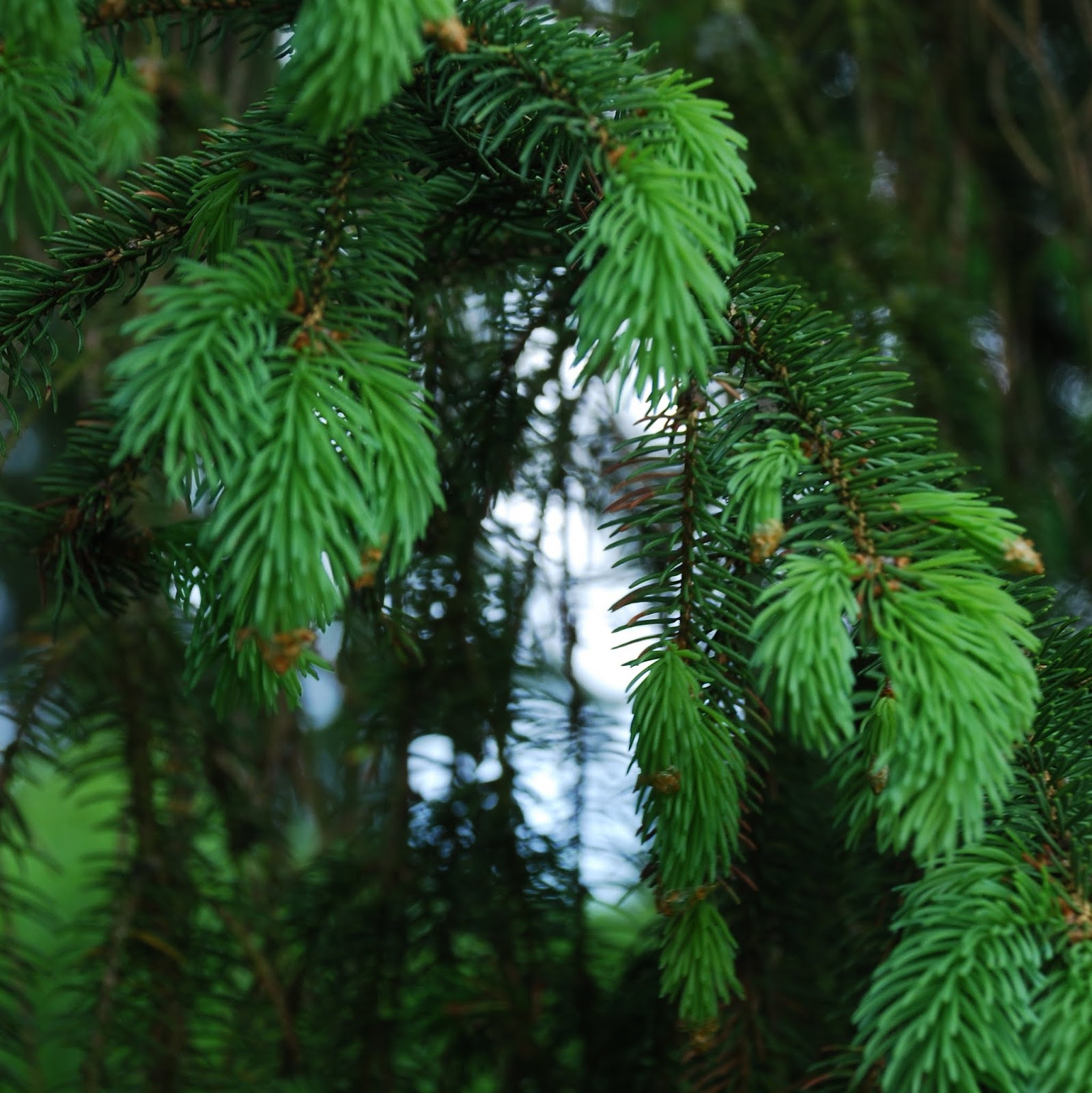
The woods are a mix of evergreen and deciduous, mainly beech but also with oak and birch.  All the varieties are now resplendent in their new green habits.  Even the firs have bright green tips to their branches where the new growth has emerged from its brown casing.

photo PD


Les bois sont un mélange d’arbres avec des feuilles persistantes et des feuilles caduques, pour la plupart des hêtres mais aussi des chênes et bouleaux.  Ils sont maintenant tous splendides avec leur nouveau feuillage.  Même les sapins on des épingles vertes vives sur les bouts des branches ou ils viennent de sortir de leur emballage brun. 


We have had more than our fair share of rain lately so there were plenty of slugs and snails to keep us company. 
Il faut dire qu’on a eu pas mal de pluie ce dernier temps alors il y avait beaucoup de limaces et escargots pour nous accompagner. 
photo PD

The came in all shapes and sizes, from the tiniest making its way along the bracken stem, to an enormous specimen on the trunk of a tree. 


photo PD


Ils étaient de tous les tailles, du plus petit qui montait le long d’une tige de fougère, jusqu’au plus gros qui se rampait sur l’écorce d’un sapin.


Despite the weather and the non-photo friendly lighting conditions we enjoyed our walk.  There were plenty of other creepy crawlies and amazing mosses and fungi which I couldn’t do justice to.  So we’ll be back now we know the woods aren’t as dark as we thought, but next time I’ll take my tripod!  

Malgré le temps, qui n’était pas de tous compatible pour prendre des photos dans les sous-bois, on s’est bien amuse. Il y avait beaucoup d’autres petites bestioles et des mousses et champignon magnifiques qui je ne pouvais pas capturer.  Alors, on va y retourner car la forêt ne fait pas aussi peu qu’on a imaginé, mais cette fois je vais ramener mon trépied !